Damaged hair: Key takeaways (TL;DR)
- Your hair is made of three layers: the cuticle, the cortex, and the medulla. When these layers become damaged, hair can become brittle, coarse, and weak.
- Damaged hair can happen for a variety of reasons, but the most common is over-styling with heat tools, over-colouring, and harsh environmental conditions.
- Though they may seem the same, there are key differences that make dry vs damaged hair different. Treat dry hair with hydrating products, and damaged hair with repairing ones.
- You can make several at-home changes to treat damaged hair. We recommend avoiding heat treatment, adjusting your diet, and switching to a silk pillowcase.
- You can also adjust your haircare routine to repair damaged hair.
What’s your damage? It’s time to give your hair some TLC.
In this article, we’ll explore the causes of damaged hair and go over everything you need to know about repairing and treating damaged hair. You’ll also learn what professionals and product descriptions mean when they describe damaged hair, which will help you find the best routine possible to help repair damaged hair.
We’ll cover:
- What is hair damage?
- The different levels of damaged hair
- Is my hair dry or damaged?
- How do I repair damaged hair?
- Haircare routine for damaged hair
What is hair damage?
- Hair feels dry, rough or straw-like
- Breakage when brushing or styling
- Split ends and frayed or uneven hair tips
- Lack of shine or a dull appearance
- Hair tangles easily and is harder to manage
- Noticeable frizz, even in low-humidity conditions
- Elasticity loss (hair stretches and snaps instead of bouncing back)
- Thinning or reduced overall volume
- More shedding than usual during washing or brushing
- Colour fading quickly in dyed or chemically treated hair
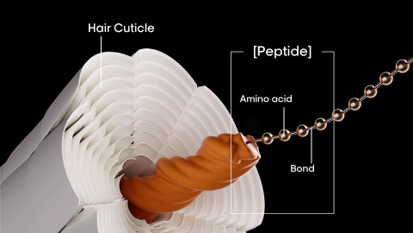
So, before answering the question, ‘how do I repair my damaged hair’, let’s make sure we have a basic understanding of what each strand of hair is made up of.
Each strand of hair consists of three layers. Let’s take a look:
- Cuticle (the outer layer)
- Cortex (the middle layer)
- Medulla (the innermost layer)
The cortex, or middle layer, contains the essential proteins, like peptides, and disulfide bonds that give our hair its elasticity and strength. Severely damaged hair features cracks in the outer layer or cuticle, which makes the inner layers even more susceptible to damage.
The different levels of damaged hair
Just as our hair has different levels, damage to it does too, and understanding how badly affected your hair is by damage is key to repairing it. In most cases, haircare professionals will split damaged hair into 3 categories of increasing severity:
- Level 1: With this level of damage, hair scales/cuticles are jagged, with some of them lifted or broken, but the hair's internal cortex is not yet fully exposed. The hair is slightly dry with less shine, duller colour and thinner ends.
- Level 2: At this level of damaged hair, you’ll experience cuticle abrasion, which means that the external layer is scraped off, and the internal cortex could be unprotected and vulnerable to damage in some areas of the hair fibre. At this hair damage level, the number of cuticle layers decreases, with a large number of scales jagged and lifted and possibly an exposed cortex. Hair will have a rough texture, with a dull appearance, an uneven colour balance and the development of split ends.
- Level 3: The highest level of hair damage. At this point, the cuticle is very damaged, with parts of it withered away completely. The cortex is exposed and can be weakened, meaning that the hair's surface texture is very coarse and deconstructed with no shine, faded colour and split ends.
What causes damaged hair?
Hair can become damaged for multiple reasons. Aggressors or stressors can break down the hair’s keratin, or natural protein structure, leading to weak, brittle and dull hair, UV rays can lead to damage, and environmental stressors can contribute. So, before exploring damaged hair treatments, let’s get into some of the most common causes so you can have a good idea of what lifestyle factors may need to be adjusted while trying to repair damaged hair.
Some of the most common culprits of hair damage include:
- Chemical processing like dyeing or bleaching: Dyeing or bleaching hair (especially at home) can deplete your hair’s hydration, turning smooth, healthy hair into coarse, damaged hair. Bleaching in particular dissolves the melanin, or pigment, in our hair, leaving the hair dry, porous and fragile. It can even permanently change and weaken your hair structure overall.
- Harsh environmental or external factors: Harmful UV rays from too much sun exposure can lead to brittle hair that’s more prone to breakage. Swimming in chlorinated water can also strip away your hair’s moisture (not to mention turn your mane green), leaving it coarse and crunchy.
- Overuse of heating tools: Styling with excessive heat, whether with a hair dryer, straight iron or curling iron, can effectively “cook” our hair, leading to raised cuticles and more porous hair. This leads to hair that is more susceptible to damage.
Is my hair dry or damaged?
First, you need to understand the structure of the hair itself. At the heart of the fibre is the hair's cortex, which contains the hair colour (melanin). This core is protected by overlapping scales called cuticles, which, on normal, healthy hair, lie flat against one another to strengthen the hair and give it a uniform, shiny appearance. When these cuticles are damaged or weakened, the core is exposed and vulnerable to snapping. When hair snaps off or breaks into split ends, the hair looks frizzy and dull.
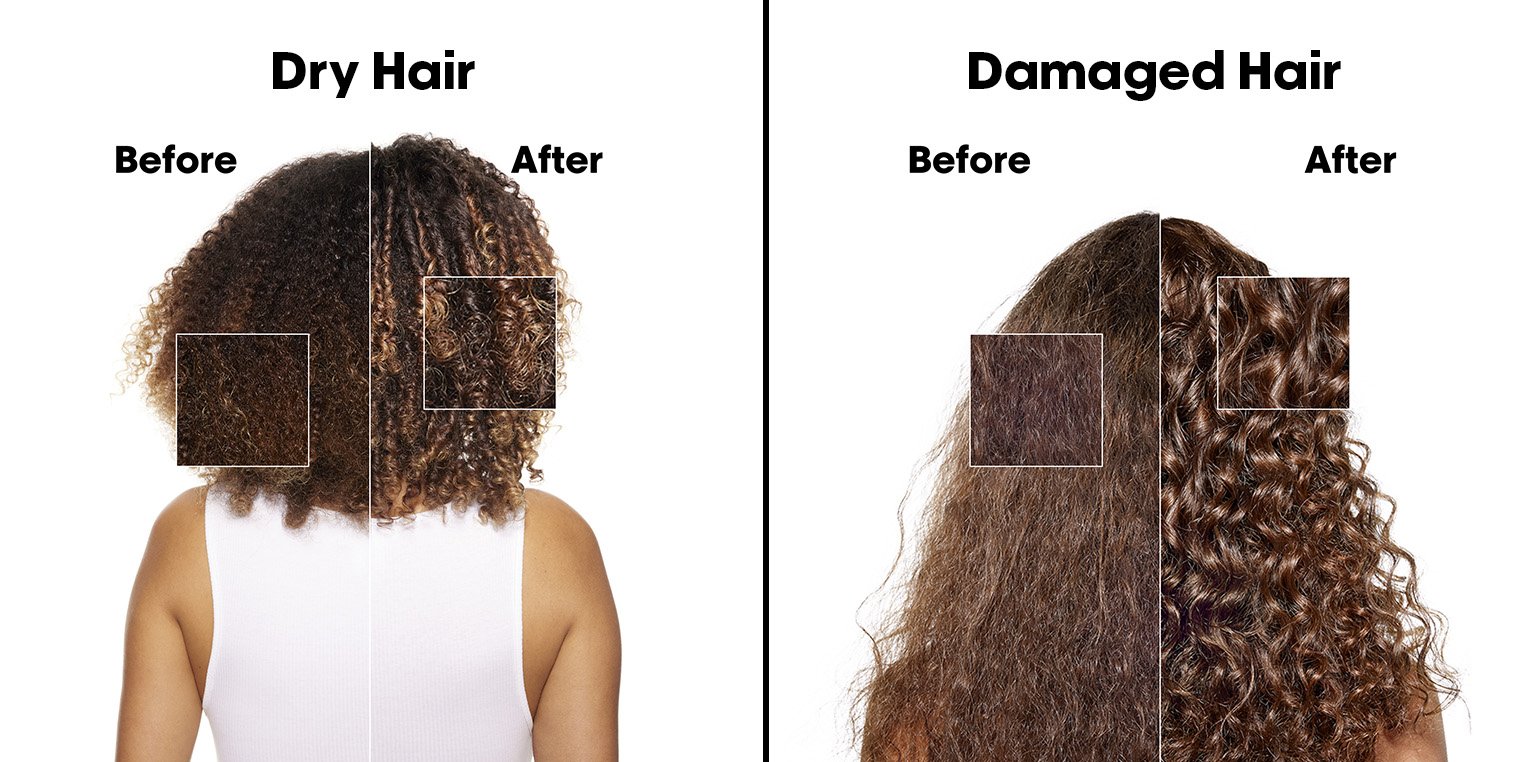
They may have similar symptoms (dullness, frizz, coarse texture), but dry and damaged hair are not the same. Dry hair is due to a lack (or the removal of) natural oils that act as lubricants all along the hair fibre. Too much, and the hair looks oily, but too little, and the hair dries out. A professional hair stylist will be able to diagnose your hair's condition in more detail, but in general, damaged hair breaks easily when pulled and has visible split ends (due to fragile bonds), while dry hair is often accompanied by white flakes of skin and a coarse, rough texture.
Dry vs damaged hair: The key points
| Dry Hair | Damaged Hair | |
|---|---|---|
| Causes | Lack of natural oils and moisture can be due to overwashing, harsh weather, and a poor diet. | Weakened hair structure resulting from harsh chemicals, over-colouring, and use of heating tools. |
| Symptoms | Frizziness, dullness, flatness, and difficulty getting any volume. | Brittleness, coarseness, visibly split ends, and breaks easily. |
| Treatments | Hydrating shampoos and conditioners, and regular haircuts. | Strengthening shampoos and conditioners, regular haircuts, and avoiding heat-styling. |
How do I repair damaged hair?
Start again: Cut your hair
If the damage is really deep, you may simply want to cut your hair and start again. Head to a stylist you trust and don’t shy away from a major cut. Then you basically get to start from a clean slate! That’s how to fix extremely damaged hair. Be sure to establish a healthy, nourishing routine with your new style.Adjust your routine: Less is more
When it comes to processing, like bleach or dye, we say, go to a salon. These processes achieve the best results when left to professionals, who know which products to use to minimise damage and maximise effect. Also, if you need to style, consider less frequent treatments to avoid damaged hair.Turn down the heat: Use protection
If you do use heat styling on your hair, we suggest a number of things to minimise damage. First, let your hair air-dry most of the way first. This reduces the necessary exposure time to heat. Then, use lower temperatures when heat styling your hair so you avoid scorching or cooking your strands.Top tip: Use a heat protectant spray before using any heat styling tools to shield your hair from heat damage, and implement UV protection to protect your hair from the sun's harmful UV rays by wearing a hat or using products with UV protection.
Nourish your hair: Targeted treatments
When it comes to the best treatments for damaged hair, look for specially-targeted, salon-quality products to support your damaged hair. You want effective formulations that focus on hydration and protection. The Absolut Repair Molecular routine by L’Oréal Professionnel is a full damaged hair treatment routine, which rebuilds the hair’s molecular structure*. The full damaged hair treatment routine works by penetrating the hair fibres to restore strength, elasticity and movement.Seek Professional Advice
If you colour your hair (or are going to), are planning on a dramatic cut, or use regular heat treatment, then consult your stylist. Damage protection starts in-salon, so ask your L'Oréal Professionnel stylist about how to prevent damaged hair during the colour process and other treatments next time you’re in.Improve Your Diet
A healthy diet rich in vitamins, minerals, and protein contributes to overall hair health. Focus on foods high in omega-3 fatty acids, protein, zinc, and vitamins A, C, and E.Be Gentle with Wet Hair
Avoid rough towel drying or brushing wet hair. Gently pat your hair dry and use a wide-tooth comb to detangle.Switch to Silk Pillowcases
Sleeping on silk or satin pillowcases reduces friction and helps prevent breakage (plus they’re more comfy, too). So, if you can, make the switch!Haircare routine for damaged hair
Why is Absolut Repair Molecular the best solution? For the first time, L'Oreal's Advanced Research team managed to decompose peptides, to inject their components, amino acids & peptides bonder, separately into the fibre. Highly concentrated with 2% Peptides bonder + 5 amino acids, Absolut Repair Molecular rebuilds hair molecular structure* and restores original hair strength**. For those wondering, ‘how do I repair damaged hair?’, follow the step-by-step guidance outlined below for the best results.
Step 1: Cleanse with Absolut Repair Molecular Shampoo
- Apply the shampoo: Ensure your hair is completely saturated before applying any product. Start with a quarter-sized amount, adding more if needed, depending on your hair length and thickness. Gently massage it into your scalp and hair, working it from the roots to the ends.
- Rinse thoroughly: Rinse your hair with lukewarm water until all traces of shampoo are gone. Ensure no residue remains, as this can weigh hair down.
Step 2: Treat with Absolut Repair Molecular Rinse-Off Serum
- Section damp hair: After rinsing out the shampoo, gently towel-dry your hair until it's damp, not soaking wet. Section your hair down the middle to ensure even application of the serum.
- Apply the serum: Dispense 2-3 pumps per section. Adjust the amount based on the thickness and length of your hair. Focus on applying the serum from the mid-lengths to the ends of your hair, avoiding your scalp.
- Rest and rinse thoroughly: Leave the mask in for 1-2 minutes to allow the formula to penetrate. After the allotted time, rinse your hair thoroughly with lukewarm water until the serum is completely removed.
Step 3: Deep Condition with Absolut Repair Molecular Rinse-Off Hair Mask
- Apply the mask: Apply the mask evenly to towel-dried hair, again focusing on the mid-lengths and ends.
- Leave in: Allow the mask to penetrate your hair for 1-2 minutes. This provides time for the nourishing ingredients to work their magic.
- Rinse thoroughly: Rinse your hair completely with lukewarm water, ensuring all traces of the mask are removed.
Step 4: Seal and Protect with Absolut Repair Molecular Leave-In Mask
- Apply the leave-in mask: Towel-dry your hair and section your hair into two halves. Apply one pump to each section. You can adjust the amount as needed for your hair type.
- Detangle and distribute: Use a wide-tooth comb or your fingers to detangle your hair and distribute the leave-in mask evenly from mid-lengths to ends. This helps to prevent breakage and further damage.
- Style as usual: Do not rinse out the leave-in mask. Proceed with your regular styling routine, whether you're air-drying or blow-drying your hair. This leave-in treatment will continue to protect and nourish your hair throughout the day.
This routine is specifically designed for damaged hair, with proven results shown to restore hair's original elasticity & movement**, with up to 97% more hair strength***. For the best treatment for damaged hair, adjust the recommended product amounts based on your individual hair length, thickness, and damage level.
Use this routine 2-3 times a week for severely damaged hair, and once a week or as needed for moderately damaged hair. For personalised recommendations, consult a professional stylist who can assess your hair's specific needs and suggest the best products and treatments.
![A product shot showcasing the Absolut Repair range for treating damaged hair. Products included are [name products].](https://www.lorealprofessionnel.co.uk/-/media/project/loreal/brand-sites/lp/shared/common/hair-pro-mag/hair-care/what-is-damaged-hair/picture-4.jpg?rev=e12d55658e50435198ea83fc84e470d4)
Discover Absolut Repair Molecular for damaged hair
Discover the Absolut Repair Range
*Instrumental test after 15 applications of Shampoo, Rinse-Off Serum & Leave-in Mask.
**Consumer test after two weeks of Shampoo, Rinse-Off Serum & Leave-in Mask.
***Brushing test vs sensitised hair
Damaged Hair: FAQs